
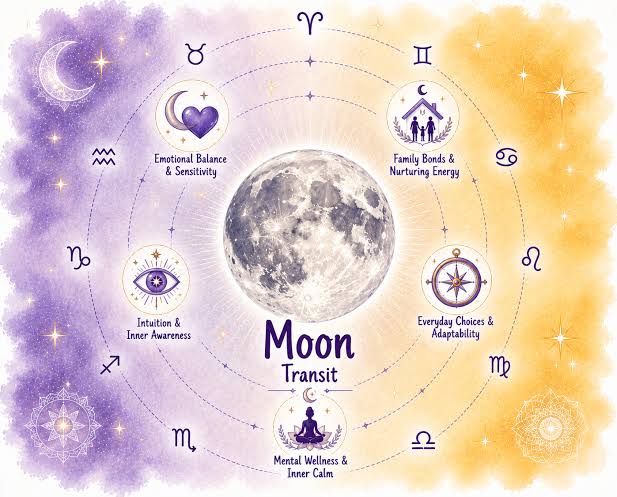
In the vast, interconnected tapestry of Vedic Astrology (Jyotish), while slow-moving giants like Saturn and Jupiter shape our years and life chapters, it is the Moon—our Chandra—that dictates the daily pulse of our existence.
As the closest celestial body to Earth, the Moon physically pulls our oceans’ tides. Astrologically, it governs the mind (Manas), emotions, instincts, and how we subjectively experience life. Because the Moon moves quickly—spending just around 2.5 days in each zodiac sign—its continuous journey across the sky acts as cosmic clockwork, shaping our day-to-day focus, energy, and mood.
At Starverse, we look at planetary movements not as rigid fate, but as a map to live more consciously. Let’s explore how Moon Transits (Chandra Gochara) work and how to read their daily impact on your chart.
What is a Moon Transit (Chandra Gochara)?
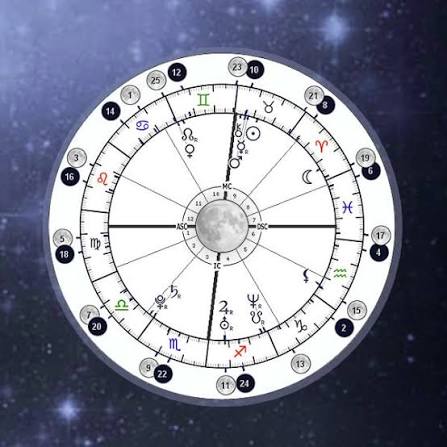
A “transit” refers to the real-time movement of planets through the 12 zodiac signs. In Vedic Astrology, a Moon Transit tracks where the current Moon is positioned relative to your fixed Natal Moon (Chandra Lagna)—the exact place the Moon was sitting the moment you were born.
Your Natal Moon is your emotional home base. As the sky’s Moon circles through all 12 houses every 27 to 28 days, it continually shifts its relationship to that birth placement.
Why the Moon Transit Matters (The Emotional Impact)
In classic Vedic texts, the Moon is revered as the Queen of the solar system. While the Sun represents your core soul and purpose, the Moon manages the daily kingdom of your mind. A Moon transit determines:
- Your prevailing emotional state and sensitivity.
- The lens through which you interpret daily events.
- Your mental clarity, stress levels, and focus.
When the Moon transits a supportive house, you feel buoyant, optimistic, and clear-headed. When it moves through a challenging sector, you might feel anxious, exhausted, or easily triggered—even if nothing in your external world has changed.
Mapping the Houses: Auspicious vs. Inauspicious Transits
To track where your attention will land, calculate which house the Moon is currently visiting, counting from your Natal Moon sign as House 1. The Moon acts like a spotlight: as it visits different houses, it absorbs that house’s theme and colors your daily experience.
🌟 The Auspicious Transits: Green Lights for Action
When the Moon visits the 1st, 3rd, 6th, 7th, 10th, or 11th house from your Natal Moon, life generally feels smoother, and your efforts meet less resistance.
- 1st House (The Self) — Rejuvenation & Focus. The Moon completes its cycle and returns home. Expect boosted magnetism, self-care focus, and personal clarity.
- 3rd House (Courage & Communication) — Motivation & Growth. As an Upachaya (growing) house, this transit cures hesitation, improves daily communication, and yields quick wins.
- 6th House (Overcoming Obstacles) — Resilience & Problem-Solving. You get the emotional grit to clear backlogs, resolve disputes, and take control of health or routines.
- 7th House (Partnerships & Connection) — Harmony & Public Appeal. The Moon lights up your social axis, making it ideal for client meetings, date nights, and collaboration.
- 10th House (Career & Status) — Visibility & Drive. Positioned at the peak of your chart, your mind aligns with public achievement and professional recognition.
- 11th House (Gains & Fulfillment) — Peak Monthly Energy. Widely considered the best transit of the month. Expect financial ease, warm social interactions, and a sense that luck is on your side.
⚠️ The Inauspicious Transits: Time to Rest & Reflect
When the Moon travels through the 2nd, 4th, 5th, 8th, 9th, or 12th house, energy shifts inward, demanding patience and emotional hygiene.
- 2nd House (Speech & Wealth) — Financial Sensitivity. You may feel defensive about resources or slip into minor miscommunications. Speak thoughtfully.
- 4th House (Domestic Peace) — Restlessness at Home. The 4th rules your core peace (Chinta). You might feel unsettled in your space or craving emotional security.
- 5th House (Mind & Intellect) — Overthinking. Because emotions cloud logic here, avoid speculative financial gambles or impulsive decisions based on temporary worries.
- 8th House (Chandra Ashtama) — Low Tide. Known as the most sensitive transit of the cycle. Vitality dips, mood swings occur, and minor problems feel heavy.
- 9th House (Beliefs & Responsibilities) — Delays. While inherently lucky, a Moon transit here can make duty feel heavy or cause minor friction with authority figures.
- 12th House (Solitude & Withdrawal) — Rest & Recharge. The 12th house drains external battery power. Use these 2.5 days for solitude, deep sleep, and spiritual recharge rather than forcing outward productivity.
Ride the Cosmic Tide with Starverse
Understanding your Moon transit turns unexpected emotional waves into actionable wisdom. If you wake up feeling unaccountably low, checking your transit might reveal a brief 12th house rest period or an 8th house Chandra Ashtama.
Instead of fighting the feeling, you can say: “This is just a temporary emotional weather pattern. It will shift in two days.” By aligning your daily schedule with the Moon’s cycle, you stop swimming against the cosmic current—and start navigating your life with clarity and ease.